 Reviews



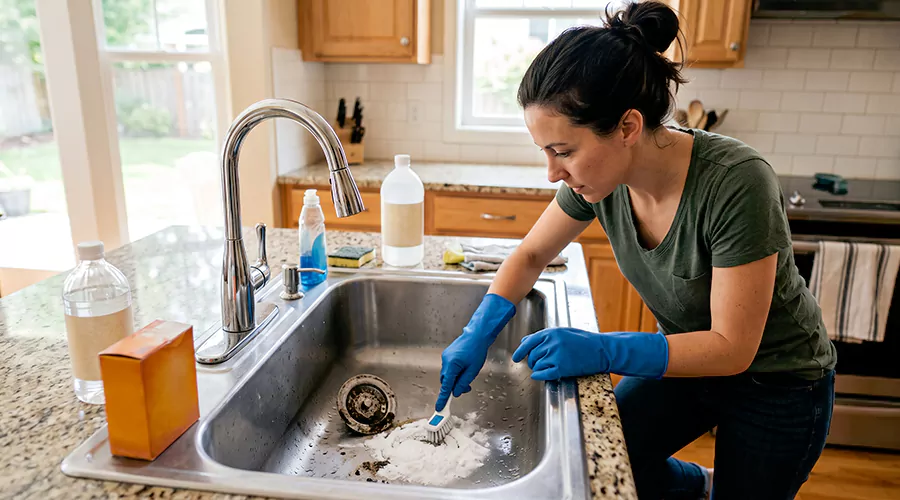
A sink drain can be cleaned in approximately 10 to 20 minutes by removing trapped debris from the stopper or strainer and scrubbing accessible drain surfaces. Regular cleaning reduces the material available to form future blockages. Professional drain cleaning averages approximately $246 in the United States according to August 2026 pricing data.
Preventive drain cleaning is different from clearing an existing complete blockage. A clean sink drain should accept normal water flow without persistent odors or visible residue around its opening. The most effective maintenance targets the material that collects inside the specific fixture.
What Makes a Sink Drain Dirty?
Sink drains collect residue from normal household use even when water continues moving freely. Bathroom sinks accumulate hair and grooming residue around their stoppers. Kitchen sinks collect food particles and grease around strainers. This material can gradually attach to the upper drain surfaces and create unpleasant odors.
Common sources of buildup include:
- Hair caught around bathroom sink stoppers.
- Soap residue attached to drain components.
- Toothpaste remaining near bathroom drain openings.
- Grease coating kitchen drainage surfaces.
- Food particles trapped inside sink strainers.
- Organic residue accumulating inside garbage disposals.
- Debris collecting inside P-traps.
Cleaning these materials before they form a dense obstruction reduces the need for more aggressive clearing methods.
How Often Should You Clean a Sink Drain?
Cleaning frequency depends on how often the sink is used and the amount of residue it receives. A frequently used kitchen sink generally needs more strainer cleaning than an occasionally used bathroom sink. The stopper should be inspected whenever visible debris begins collecting.
The following schedule is a practical household maintenance plan rather than a fixed plumbing requirement.
| Maintenance Task | Suggested Frequency | Main Benefit |
|---|---|---|
| Remove visible food from kitchen strainer | After use | Keeps solids out of the drain |
| Remove accessible bathroom hair | Weekly | Limits accumulation |
| Clean the drain opening | Weekly | Reduces surface residue |
| Scrub the stopper or strainer | Every 1–2 weeks | Removes attached buildup |
| Check for drainage changes | During normal use | Identifies early restrictions |
| Inspect the P-trap | When symptoms persist | Locates deeper debris |
Regular physical cleaning is particularly useful because it removes material before the accumulation becomes difficult to access.
What Are the Signs That Your Sink Drain Needs Cleaning?
A dirty drain can develop odor or visible residue before it becomes noticeably slow. Early cleaning should focus on removing accumulated material near the opening. A sink that already holds standing water may need a different approach because ordinary maintenance will no longer address the full obstruction.
Watch for these signs:
- Hair collects around the stopper.
- Food remains beneath the kitchen strainer.
- A sticky film develops around the drain opening.
- The drain produces a mild unpleasant odor.
- The stopper becomes difficult to move.
- Water takes slightly longer to drain.
- Residue collects beneath a disposal splash guard.
- A visible coating remains after normal rinsing.
- Small amounts of debris repeatedly collect near the opening.
- The sink begins gurgling during normal use.
Persistent sewer-like odors or repeated slow drainage deserve separate diagnosis because surface cleaning may not address the underlying condition.
What Supplies Do You Need?
Routine sink drain cleaning usually requires only a few basic household supplies. The correct equipment depends on the stopper design and the material collecting near the opening. Mechanical cleaning is preferable when visible debris can be removed directly.
Useful supplies include:
- Waterproof cleaning gloves.
- Mild dish soap.
- A small non-scratching cleaning brush.
- An old toothbrush for accessible components.
- A flexible plastic hair-removal tool when needed.
- A suitable container for removed debris.
- Old towels to protect the surrounding area.
A bucket becomes useful if the P-trap needs inspection. Avoid purchasing specialized clearing equipment for a drain that only needs accessible surface cleaning.
How Do You Clean a Bathroom Sink Drain?
Bathroom sink cleaning should begin with the stopper because its moving components frequently catch hair and residue. Removing the stopper allows direct access to material that cannot be reached during ordinary basin cleaning. The exact removal method depends on the stopper design.
Follow these steps:
- Identify the stopper: Determine whether it lifts out or connects to a pivot rod.
- Remove it carefully: Do not force a stopper that remains attached.
- Pull away trapped hair: Remove all material wrapped around its lower section.
- Wash the stopper: Use mild dish soap and a suitable brush.
- Inspect the upper drain: Look for residue that remains near the opening.
- Clean accessible surfaces: Use a narrow brush without scratching the drain finish.
- Rinse the area: Use appropriately warm water.
- Reinstall the stopper: Confirm that it moves normally.
Some bathroom stoppers require disconnecting the pivot rod beneath the sink. Lowe's provides separate removal guidance because stopper designs differ.
How Do You Clean a Kitchen Sink Drain?
Kitchen sink cleaning should focus on removing food and grease before either material enters deeper drainage piping. The strainer is the first inspection point. A clean-looking sink basin can still contain substantial food residue directly beneath its drain opening.
A practical cleaning routine includes:
- Remove the strainer.
- Dispose of collected food in the trash.
- Wash the strainer with dish soap.
- Scrub accessible residue around the drain rim.
- Remove visible grease from the upper drain.
- Rinse with hot tap water suitable for the piping.
- Reinstall the strainer.
- Confirm that water drains normally.
The strongest preventive measure is keeping grease out of the drainage system entirely. Portland's wastewater authority warns that cooking grease can solidify inside pipes and contribute to sewer blockages.
How Do You Clean a Garbage Disposal?
Garbage disposals can develop odors when food residue remains inside the chamber or around the removable splash guard. Regular cleaning can reduce organic buildup. However, maintenance should follow the manufacturer's instructions because disposal designs and removable components differ.
- Turn off electrical power before cleaning near the grinding chamber.
- Never place your hand inside the disposal.
- If the splash guard is designed to be removed, take it out according to the manufacturer's instructions. Clean accessible residue using a suitable brush.
- Do not attempt to disassemble sealed disposal components during routine maintenance.
Cleaning the disposal can reduce odor. It will not remove a blockage located farther inside the kitchen branch drain.
Can Baking Soda and Vinegar Clean a Sink Drain?
Baking soda and vinegar can be used for light household cleaning, but they are not a substitute for physically removing hair or grease. Their bubbling reaction may disturb minor residue near accessible surfaces. A dense obstruction requires a different method because the solid material remains inside the pipe.
If you use this approach, first remove visible debris. Never combine household cleaning mixtures with commercial drain-opening products. Avoid treating baking soda and vinegar as a disinfectant. Routine mechanical cleaning with soap and water removes residue without relying on a chemical reaction.
The CDC recommends cleaning household surfaces with soap and water as an effective routine cleaning method.
Should You Remove the P-Trap During Routine Cleaning?
The P-trap does not normally require removal during every cleaning session. Surface cleaning is sufficient when the sink drains properly and no persistent odor is present. Trap inspection becomes more relevant when residue or slow drainage remains after accessible components have been cleaned.
If the trap needs inspection:
- Remove stored items beneath the sink.
- Place a bucket below the curved pipe.
- Loosen the removable connections.
- Lower the trap carefully.
- Empty its contents.
- Clean the interior.
- Inspect the washers.
- Reassemble the plumbing.
- Check for leaks.
Do not remove the trap simply because the basin has developed ordinary surface residue. Unnecessary disassembly creates additional opportunities for misaligned washers or leaking connections.
What Should You Avoid During Sink Drain Cleaning?
Routine cleaning should remove accumulated residue without damaging plumbing components or exposing you to hazardous chemical mixtures. Several common cleaning mistakes create unnecessary risks while providing little benefit for light buildup.
Avoid the following:
- Mixing different commercial drain cleaners.
- Combining bleach with vinegar.
- Using sharp metal objects against decorative drain surfaces.
- Pouring boiling water into plumbing with uncertain heat tolerance.
- Washing removed hair into another drain.
- Pouring cooking grease into the sink.
- Removing the P-trap without a bucket.
- Overtightening plastic plumbing connections.
A cleaning routine should become more involved only when the drain develops symptoms that ordinary maintenance cannot correct.
How Can You Confirm That the Drain Is Clean?
A clean sink drain should accept normal water flow without leaving visible debris around the opening. Testing also helps reveal whether routine cleaning has uncovered a deeper blockage. The final inspection should include both the basin and accessible plumbing beneath it.
Use this test:
- Reinstall the stopper or strainer.
- Run water at a low rate.
- Check for unusual pooling.
- Increase to normal faucet flow.
- Allow the water to run briefly.
- Inspect the visible drain opening.
- Check beneath the sink if any plumbing was disconnected.
- Observe whether the previous odor returns.
Slow drainage after cleaning indicates that residue may remain farther inside the system.
When Should You Call a Professional?
Professional cleaning is appropriate when the sink remains slow after accessible components have been cleaned or a deeper obstruction cannot be safely reached. Persistent sewer-like odors can also indicate a condition beyond ordinary surface buildup.
Professional drain cleaning costs between $147 and $352 in the United States in 2026.
Consider professional diagnosis when:
- Normal cleaning does not improve slow drainage.
- A hand auger cannot reach the obstruction.
- The same blockage repeatedly returns.
- Multiple connected fixtures become slow.
- Wastewater backs up through the sink.
- A sewer-like odor persists despite normal trap use.
A simple dirty drain and a recurring plumbing problem should not receive the same treatment.
How Can You Keep a Sink Drain Clean?
Long-term drain maintenance works best when you remove material before it enters the pipe. Regular cleaning should focus on the stopper or strainer rather than repeatedly treating deeper plumbing. Adjust the routine according to how much residue the household produces.
Helpful habits include:
- Remove hair from bathroom stoppers every week.
- Empty kitchen strainers after food preparation.
- Clean accessible drain surfaces regularly.
- Keep cooking grease out of the sink.
- Watch for gradual changes in drainage speed.
- Run water in rarely used sinks to maintain their trap seals.
A preventive routine generally costs very little compared with a professional drain-cleaning visit.
Conclusion
To clean a sink drain, focus on the components that collect residue during normal use. Remove hair from bathroom stoppers and keep food out of kitchen strainers. Scrub accessible surfaces before buildup moves deeper into the plumbing. A P-trap inspection is more appropriate when symptoms persist. If routine cleaning cannot restore drainage or remove persistent sewer odors, professional investigation may be appropriate. Clean your sink stopper or strainer this week.
Frequently Asked Questions
How often should you clean a sink drain?
Inspect frequently used drains every week. Adjust deeper cleaning according to visible buildup and drainage performance.
Can a clean sink still have a dirty drain?
Yes. Residue can collect beneath the stopper or strainer even when the visible basin looks clean.
Should you clean the P-trap every week?
No. Routine surface cleaning is normally sufficient when the drain works properly.
Can baking soda remove a serious sink clog?
Baking soda is not a reliable solution for dense physical blockages. Mechanical clearing is more appropriate.
Why does my sink still smell after cleaning?
Residue may remain deeper inside the drain. A dry P-trap or another plumbing condition can also produce odors.